
The Prague Spring (Czech: Pražské jaro; Slovak: Pražská jar) was a period of political liberalization and mass protest in the Czechoslovak Socialist Republic. It began on 5 January 1968, when reformist Alexander Dubček was elected First Secretary of the Communist Party of Czechoslovakia (KSČ), and continued until 21 August 1968, when the Soviet Union and four other Warsaw Pact members (Bulgaria, East Germany, Hungary and Poland) invaded the country to suppress the reforms. The Prague Spring reforms were an attempt by Dubček to grant additional rights to the citizens of Czechoslovakia in an act of partial decentralization of the economy and democratization.
 Alexander Dubček
 Jan Palach
 Gustáv Husák
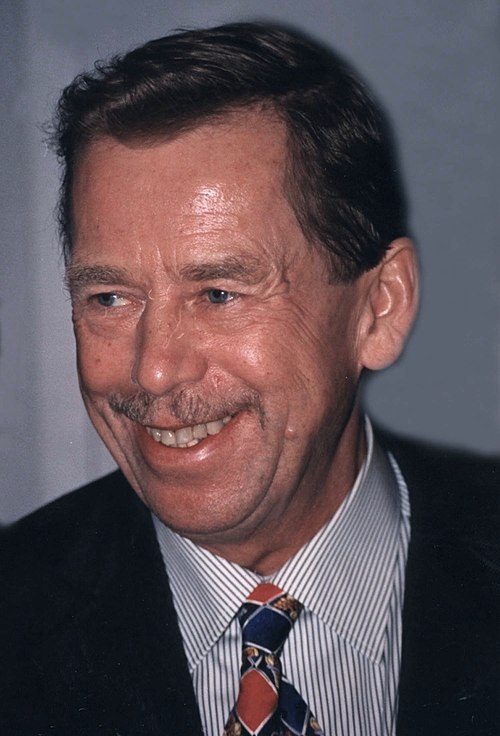 Václav Havel
 Karel Husa
 Karel Kryl