Charles V
1500 CE – 1558 CE
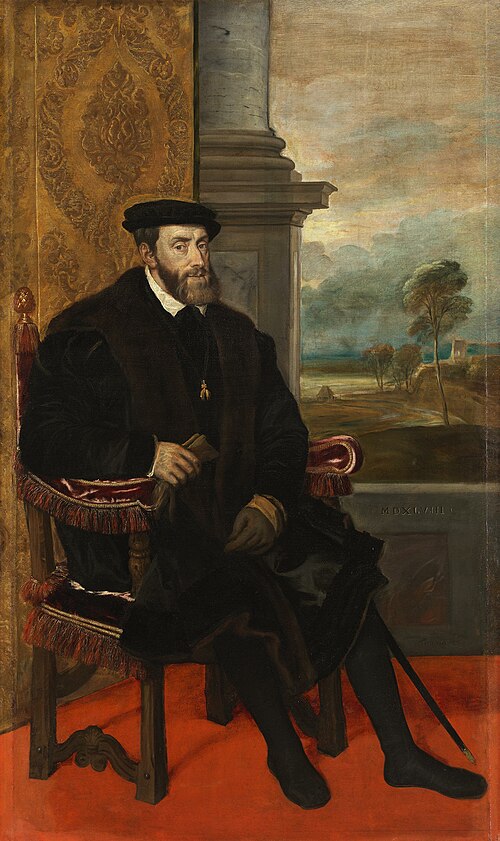
Charles V (24 February 1500 – 21 September 1558) was Holy Roman Emperor and Archduke of Austria from 1519 to 1556, King of Spain (as Charles I) from 1516 to 1556, King of Sicily and Naples from 1516 to 1554, and also Lord of the Netherlands and titular Duke of Burgundy (as Charles II) from 1506 to 1555. He was heir to and then head of the rising House of Habsburg. His dominions in Europe included the Holy Roman Empire, extending from Germany to northern Italy with rule over the Austrian hereditary lands and Burgundian Low Countries, and Spain with its possessions of the southern Italian kingdoms of Sicily, Naples, and Sardinia.
Read on WikipediaTimeline · 4 moments
Born · 1500 CE
1517 CECharles V Arrives In SpainCharles V (24 February 1500 – 21 September 1558) was Holy Roman Emperor and Archduke of Austria from 1519 to 1556, King of Spain (as Charles I) from 1516 to 1556, King of Sicily and Naples from 1516 to 1554, and also Lord of the Netherlands and titular Duke of Burgundy (as Charles II) from 1506 to 1555. He was heir to and then head of the rising House of Habsburg. His dominions in Europe included the Holy Roman Empire, extending from Germany to northern Italy with rule over the Austrian hereditary lands and Burgundian Low Countries, and Spain with its possessions of the southern Italian kingdoms of Sicily, Naples, and Sardinia.
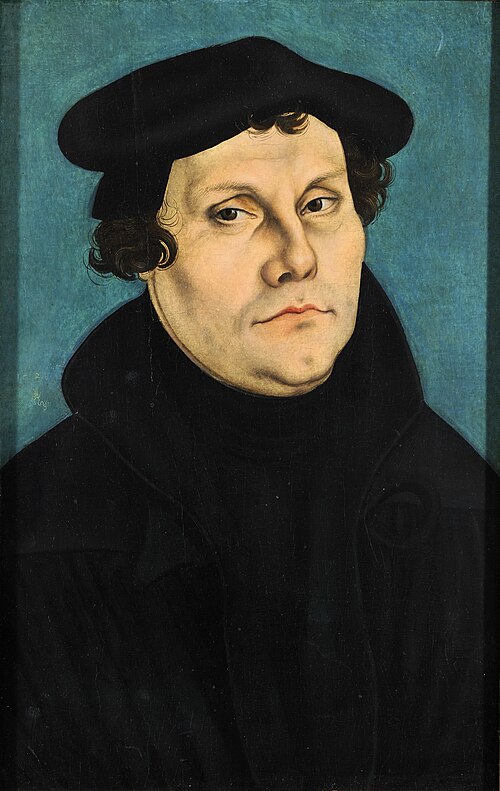
1521 CELuther At The Diet Of WormsThe Diet of Worms of 1521 (German: Reichstag zu Worms [ˈʁaɪçstaːk tsuː ˈvɔʁms]) was an imperial diet (a formal deliberative assembly) of the Holy Roman Empire called by Emperor Charles V and conducted in the Imperial Free City of Worms. Martin Luther was summoned to the diet in order to renounce or reaffirm his views in response to a Papal bull of Pope Leo X. In answer to questioning, he defended the views that had been criticized and refused to recant them. At the end of the diet, the Emperor issued the Edict of Worms (Wormser Edikt), a decree which condemned Luther as "a notorious heretic" and banned citizens of the Empire from propagating his ideas.
1527 CESwiss Guard Stand During The Sack Of RomeThe Sack of Rome, then part of the Papal States, followed the capture of Rome on 6 May 1527 by the mutinous troops of Charles V, Holy Roman Emperor, during the War of the League of Cognac. Charles V only intended to threaten military action to make Pope Clement VII come to his terms. However, the Imperial army (14,000 Germans, including Lutherans, 6,000 Spaniards and some Italians) were largely unpaid and mutinied.
1555 CEPeace Of Augsburg ProclaimedThe Peace of Augsburg (German: Augsburger Frieden), also called the Augsburg Settlement, was a treaty between Charles V, Holy Roman Emperor, and the Schmalkaldic League, signed on 25 September 1555 in the German city of Augsburg. It officially ended the religious struggle between the two groups and made the legal division of Christianity permanent within the Holy Roman Empire, allowing rulers to choose either Lutheranism or Roman Catholicism as the official confession of their state. Calvinism was not allowed until the Peace of Westphalia.
Died · 1558 CE