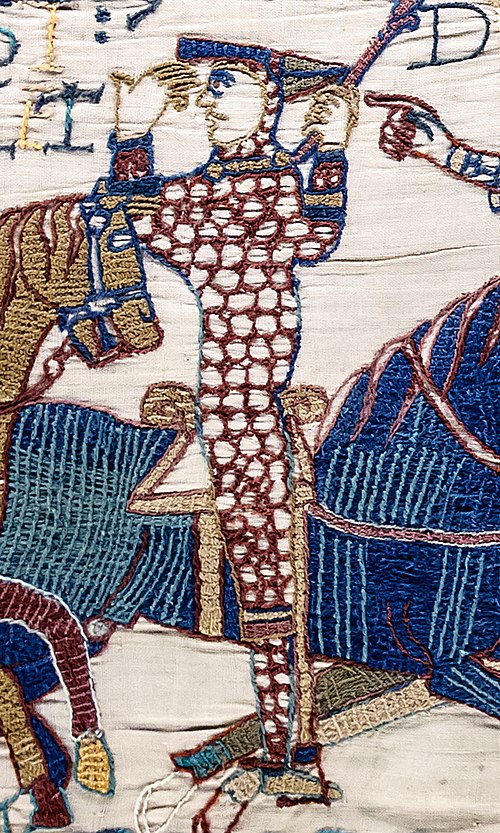
William the Conqueror
1028 CE – 1087 CE
William the Conqueror (c. 1028 – 9 September 1087), sometimes called William the Bastard, was the first Norman king of England (as William I), reigning from 1066 until his death. A descendant of Rollo, he was Duke of Normandy (as William II) from 1035 onward. By 1060, following a long struggle, his hold on Normandy was secure.
Read on WikipediaTimeline · 7 moments
Born · 1028 CE
1066 CEWilliam Lands At PevenseyWilliam the Conqueror (c. 1028 – 9 September 1087), sometimes called William the Bastard, was the first Norman king of England (as William I), reigning from 1066 until his death. A descendant of Rollo, he was Duke of Normandy (as William II) from 1035 onward. By 1060, following a long struggle, his hold on Normandy was secure.
1066 CEWilliam The Conqueror Crowned At WestminsterWilliam the Conqueror (c. 1028 – 9 September 1087), sometimes called William the Bastard, was the first Norman king of England (as William I), reigning from 1066 until his death. A descendant of Rollo, he was Duke of Normandy (as William II) from 1035 onward. By 1060, following a long struggle, his hold on Normandy was secure.
1066 CEHarold Godwinson Crowned Before HastingsHarold Godwinson (died 14 October 1066), also called Harold II, was the last crowned Anglo-Saxon king of England. Harold reigned from 6 January 1066 until his death at the Battle of Hastings on 14 October 1066, the decisive battle of the Norman Conquest. He was succeeded by William the Conqueror, the victor at Hastings.
1071 CEHereward The Wake Defends The Isle Of ElyHereward the Wake (Old English pronunciation /ˈhɛ.rɛ.ward/ HEH-reh-ward, modern English pronunciation / HEH-ri-wəd; c. 1035 – c. 1072) (also known as Hereward the Outlaw or Hereward the Exile) was an Anglo-Saxon nobleman and a leader of local resistance to the Norman Conquest of England. His base when he led the rebellion against the Norman rulers was the Isle of Ely, in eastern England. According to legend, he roamed the Fens, which covers parts of the modern counties of Cambridgeshire, Lincolnshire and Norfolk, and led popular opposition to William the Conqueror.
1086 CEDomesday Book Completed At WinchesterDomesday Book (DOOMZ-day; the Middle English spelling of "Doomsday Book") is a manuscript record of the Great Survey of much of England and parts of Wales completed in 1086 at the behest of William the Conqueror. The manuscript was originally known by the Latin name Liber de Wintonia, meaning "Book of Winchester", where it was originally kept in the royal treasury. The Anglo-Saxon Chronicle states that in 1085 the king sent his agents to survey every shire in England, to list his holdings and dues owed to him.
1100 CEHenry I Crowned At WestminsterHenry I (c. 1068 – 1 December 1135), also known as Henry Beauclerc, was King of England from 1100 to his death in 1135. He was the fourth son of William the Conqueror and was educated in Latin and the liberal arts. On William's death in 1087, Henry's elder brothers Robert Curthose and William Rufus inherited Normandy and England, respectively, thereby leaving Henry landless.Legacy · after death
1100 CEWhite Tower CompletedThe White Tower is a former royal residence, the old keep, at the Tower of London in England. It was built by William the Conqueror during the early 1080s, and subsequently extended. The White Tower was the castle's strongest point militarily, provided accommodation for the king and his representatives, and housed a chapel.Legacy · after death
Died · 1087 CE
Connected figures · 3